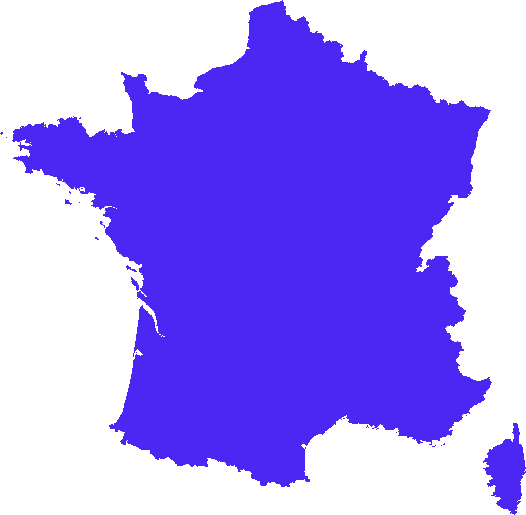
Ciudad del Este, PY/Foz do Iguaçu, BR
On Sunday, February 28th before crossing the bridge on Rio Paraná, I
stopped at the building of the immigration of Paraguay to make
stamped my passport at the exit. Then I was going on foot 30 meters
further to return the permit to circulate at a customs officer in a
kiosk being made wax his shoes. At the other end of the bridge under
a vast hood I got information near a police officer who made me park
my truck to go on foot to the building of immigration to fill out
the ad hoc information sheet then to present it with my passport to
obtain a 90-day visa. I understood that there was nothing to do for
the customs (!). The whole procedure to exit Paraguay and to enter
Brazil lasted half an hour.
Foz do Iguaçu
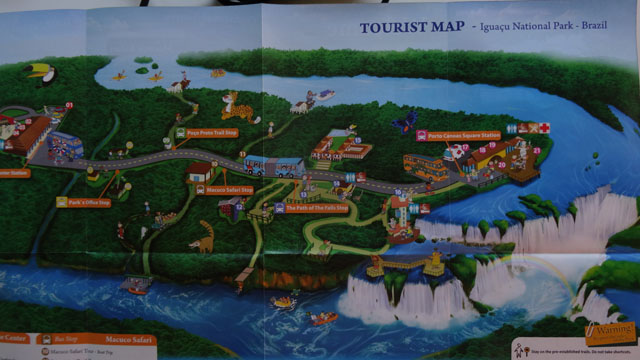
I decided to go to visit Cataratas do Iguaçu at approximately 20 km.
It is necessary to park his vehicle to take a bus after having paid
the parking and the entry to visit 78,30R$. In this raining season
there was much water. The spectacle is very impressive. A way curves
opposite the falls in a tropical forest. The noise is deafening and
a fog stations above falls and the river flooding that charmed
spectators. I returned to Foz to bivouac at the Internacional
Campground, with electricity, 110/220 volts, water as well as a WiFi
connection.
Cataratas do Iguaçu, click the picture
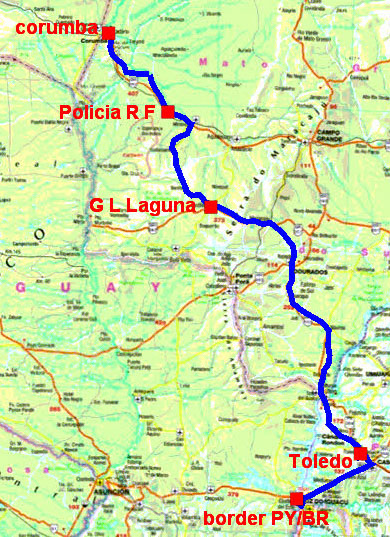
Route #467
Monday, February 29th I gave up without regret the Camping
Internacional whose bathrooms show a nauseous outdatedness. Before
leaving Foz I stopped in Super Muffato to make food supply. Then
they were roads Br 277 and Br 467. The roads are with toll. I
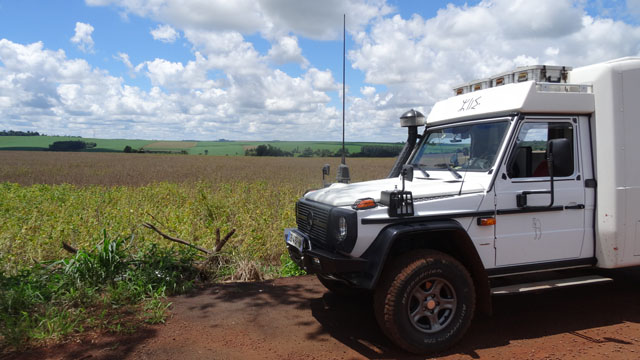
stopped on a way of reversal little before Toledo to lunch and
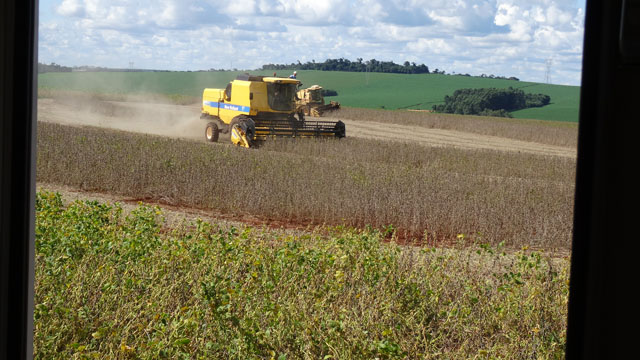
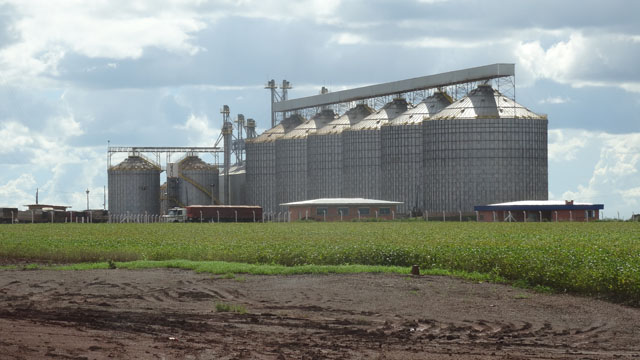
finally to bivouac. This part of Brazil is dedicated to agriculture.
The harvest is in hand with modern material New Holland. The
landscape is dominated as in the USA by metal silos.
 |
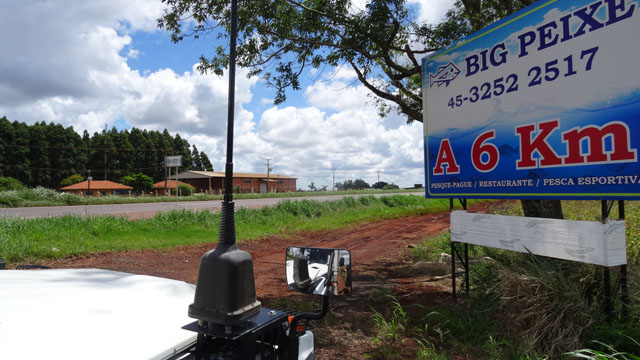 |
| Bivouac, route #467 |
Guia Lopez da Laguna
On Tuesday, March 1st was a driving long day, 565 km in 10 hours, to
approach Bonito in Pantanal which is the largest fresh water wetland
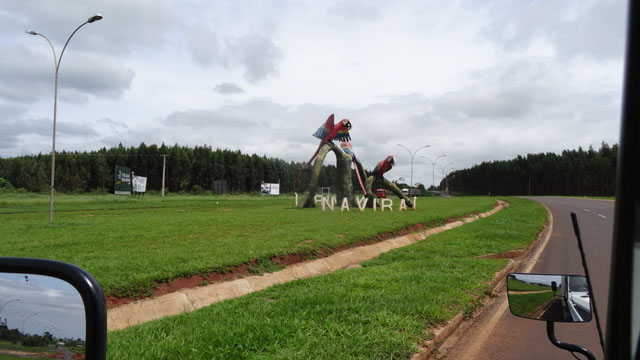
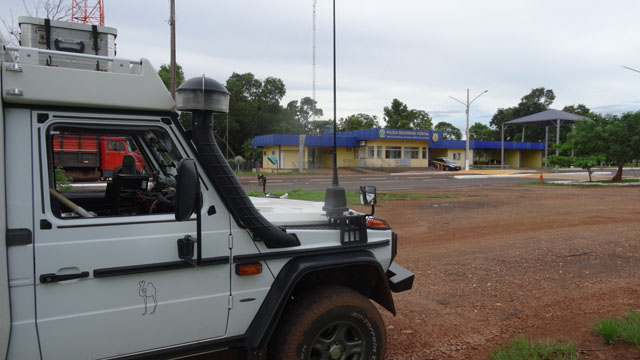
in the world, 210,000 km ². Harassed I established my bivouac
opposite Policia Rodoviaria Federal at about 5 km away from Guia
Lopez da Laguna.
 |
 |
|
Bivouac |
Route BR #262
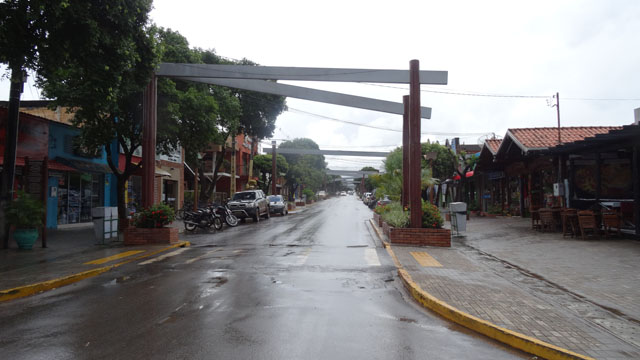
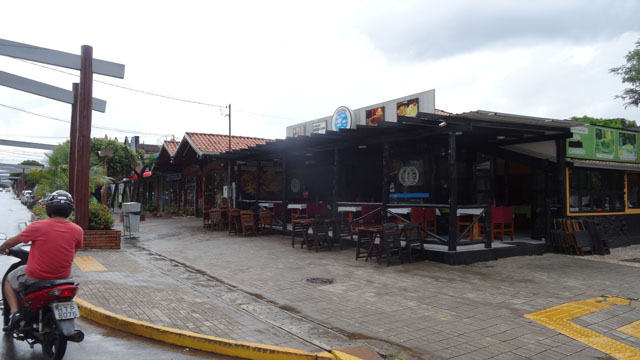
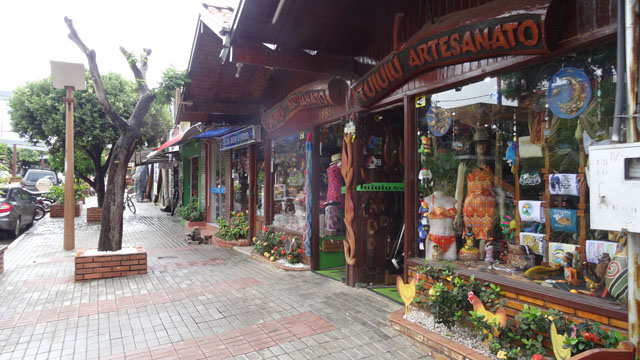
The day of March 2nd was not only gloomy but also rainy, all the
day. There was no soul in the main street dedicated to the trade for
tourists. Bonito is the typical example of a city pushed by tourism,
but out the rainy season. At the beginning of afternoon I decided to
go to further see, like the goat of Mr Seguin, if time were more
mild. Thus I passed Miranda in the rain to bivouac opposite Policia
Rodoviaria Federal. Tomorrow will be a day… sunny
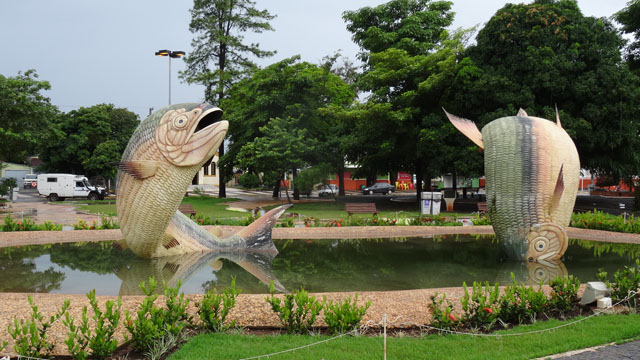
Corumbá
The objective of the Thursday, March 3rd was to go to bivouac in the
campground of Lontra Pantanal Park Hotel to approach the Pantanal's
fauna and the flora. Alas when I arrived after 10 km on track and
five wooden bridges limited at 15t, the reception informed me that
due to raw of the rivers the campground was under water. It was
advised to me to go my way. Although it was not in my intention I
went to Corumbá at the edge of Rio Paraguai which was a resplendent
port at the time of colonization and at the border with Bolivia. The
front of the river is a park with the painted houses of the colonial
era. I bivouacked on the quay.
A Lontra Pantanal Park Hotel, click the picture
Corumbá, click the picture
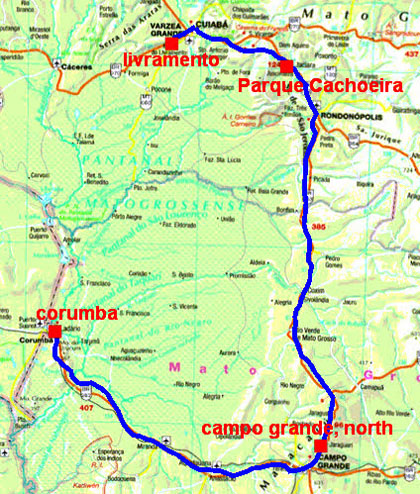
The road tacklog
from Corumbá to N. -S. do Livramento
from 2016/03/04 au 2016/03/06
Campo Grande
On Friday, March 4th I undertook to circumvent Pantanal by the east
to reach Cuiabá at the north, Mato Grosso's state capital. Up to
Campo Grande the ruta #562 longe the Pantanal del Sul. North of
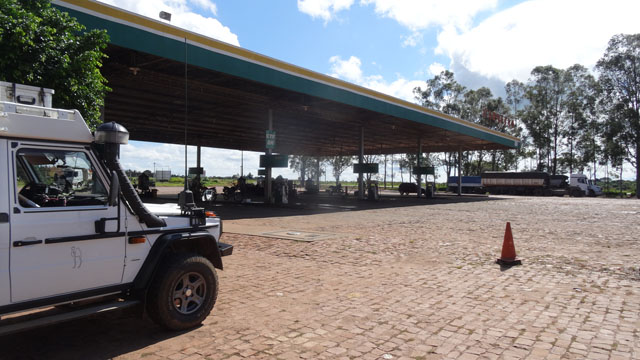
Campo Grande I stopped to fill up the tanks with diesel fuel,
already 1686 km in Brazil in 6 days. Brazil is very large, nearly
8.5 million km ². I bivouacked on the spot with a WiFi connection.
 |
 |
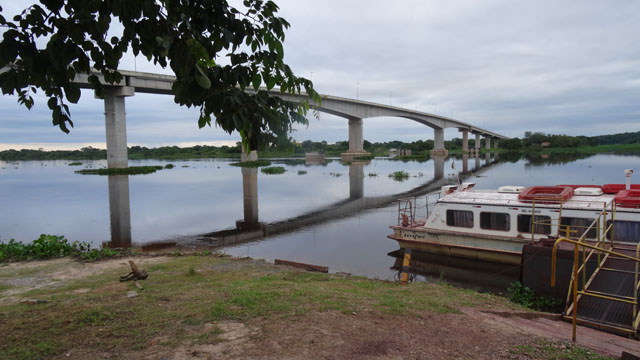
| Bridge over Rio Miranda |
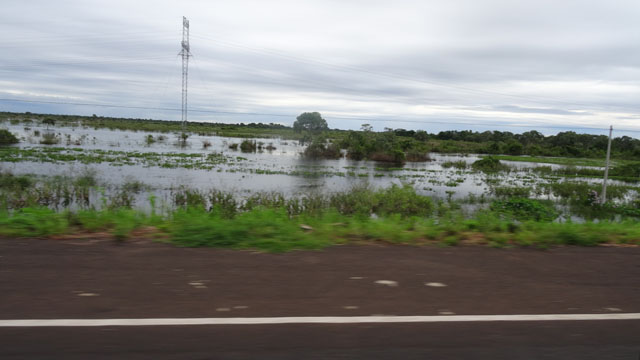
Fresh Water Wetlands |
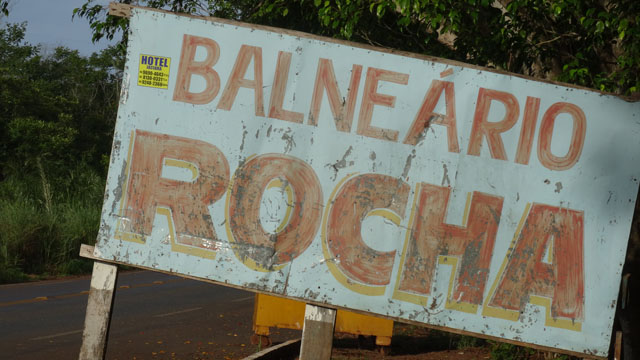
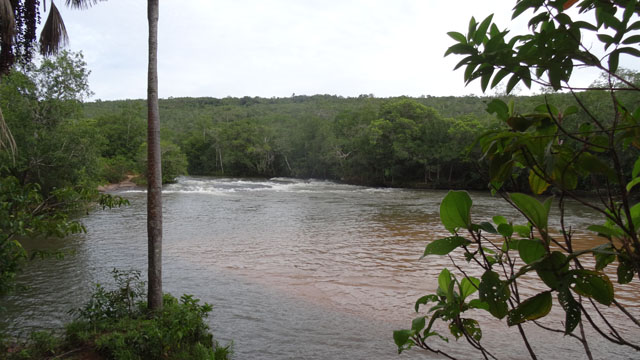
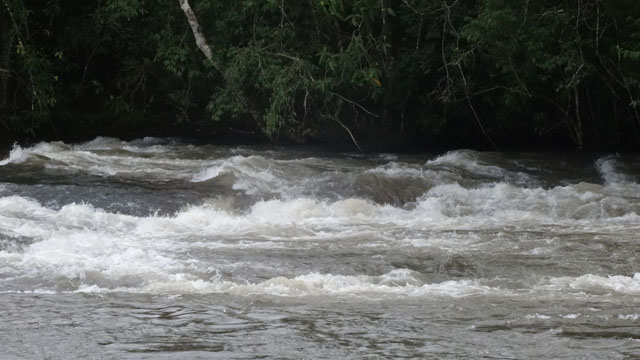
Parque Cachoeira da Fumaça
On Saturday, March 5th still a long driving day, 513 km, in twelve
hours stops included. I had never seen as many trucks in long lines
in the two directions driving at the maximum speed authorized for
the cars, 100 km/h. The roadway was into bad state; the many
pot-holes caused frequent stops of the column during long minutes.
The tractors draw two trailers for a length from 26 to 27 meters.
The trailers being covered I could not identify the loading. They
are of European origin. An observation, no statistical, shows the
order of the manufacturers: Scania, Volvo, largely at the head, then
Mercedes-Benz and Volkswagen, finally in back of the pack Iveco and
MAN. The Volvo tractors of last generation post a power of 540/560
HP! All the roads are with toll and the crossings of cities and
villages have frightening topes. Finally the roads are strewn with
post office of Policia Rodoviaria Federal, with topes speed
reducers. Many automatic checks speed are installed, but signposts
announce them not to surprise drivers. Consequently the mean
velocity in one day is lower than 50 km/h. Unlike the countries
previously visited, Brazil shows by the modernity of the industrial
buildings the economic boom of these last years. I bivouacked away
from the road in a park at the edge of water with a swimming pool
where I was going to splash to slacken my tired body of this long
day without interest.
|
 |
 |
N. -S do Livramento
The following day Sunday, one takes the same ones as the day before;
long column of trucks up to the entry of Cuiabá. After a small round
into Cuiabá, town of +500,000 inhabitants, Mato Grosso's state
capital. I took the direction to Poconé and Porto Jofre in Pantanal
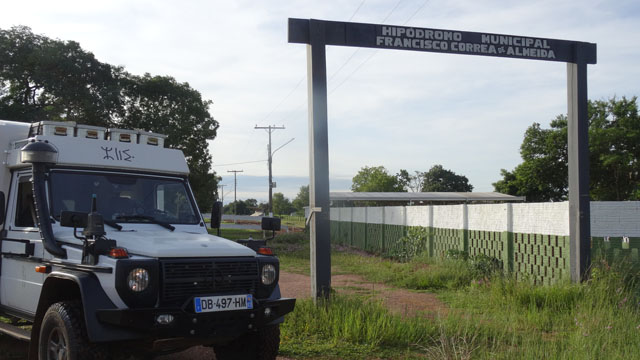
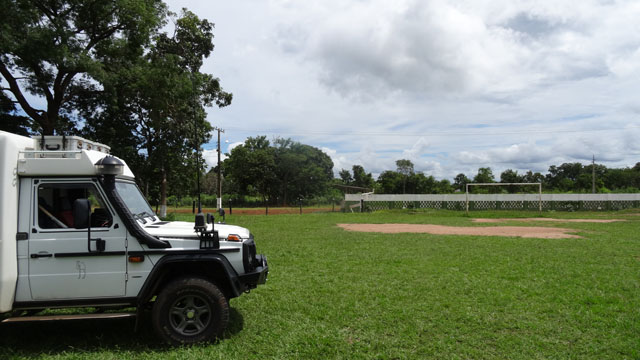
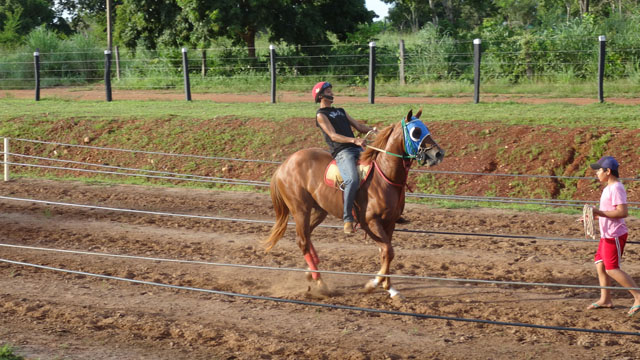
del Norte. I bivouacked close to a hippodrome on the ground of a
house from which the owner had come to accommodate me.
 |
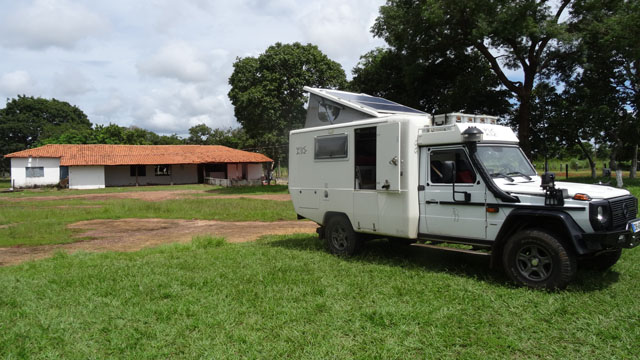 |
| bivouac close to the hippodrome |
 |
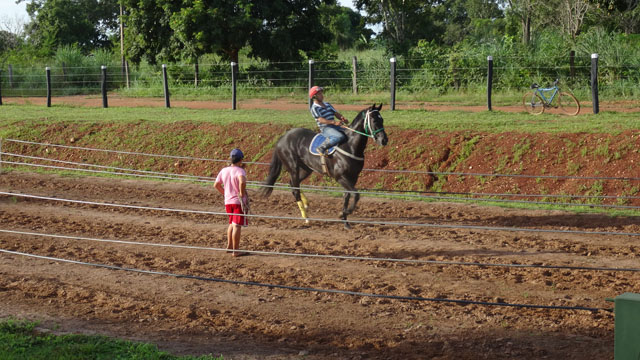 |
| bivouac close to the hippodrome |